
50 signed and numbered prints 20″ x 30″
$345.00
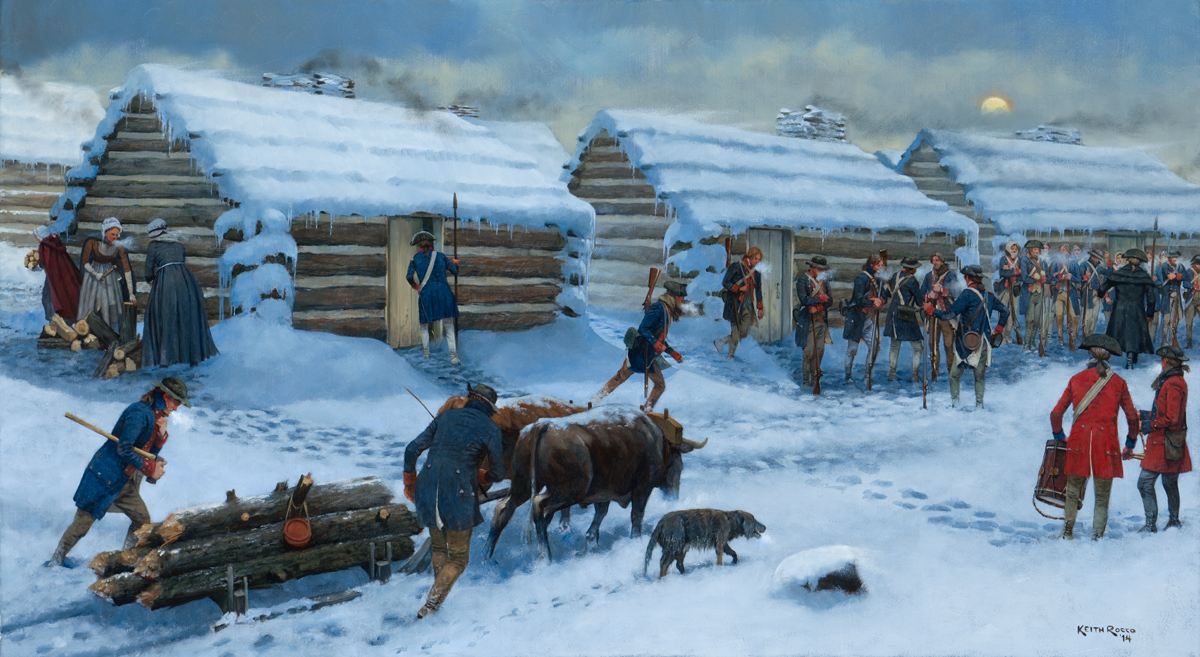
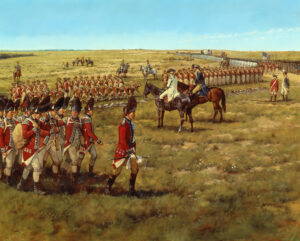
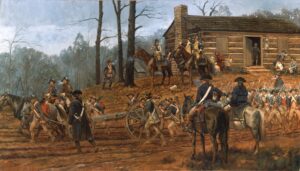
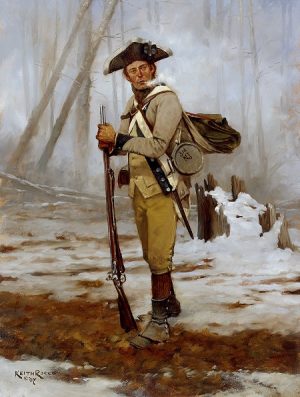
During the winter of 1779–80, at least 20 snowstorms cut supply lines for food, clothes, and shoes. “The weather was cold enough to cut a man in two,” wrote Pvt. Joseph Plumb Martin. Despite the conditions, the business of maintaining the 10,000-man army continued. Thousands of acres of trees were felled for over 1,000 log huts, built in precise rows on the hillsides. Huts housed 12 enlisted men; field officers had larger quarters. Units from each state generally encamped as a group. Routine work included hauling and chopping wood, cooking, digging latrines, troop inspections, and guard duty.
There were many women who assisted the army daily. These were the women, both married and unmarried, who supported the soldiers in camp. They did the laundry, cooked the meals, mended clothes and nursed the sick. Despite their contributions, for the most part these women, commonly called camp followers, remain faceless and nameless.
Morristown was the site of four different winter encampments. And it was a temporary campsite for passing armies throughout the war. Additionally, for much of the war Morristown served the military as a supply depot, hospital. and jail. All these activities brought the army and its women to Morristown during the eight years of the American Revolution. Eric Olsen, Park Ranger/Historian, Morristown NHP
| Medium | |
|---|---|
| Type | |
| Size | 20" x 30" |