
50 signed and numbered prints
24″ x 30″
$360.00
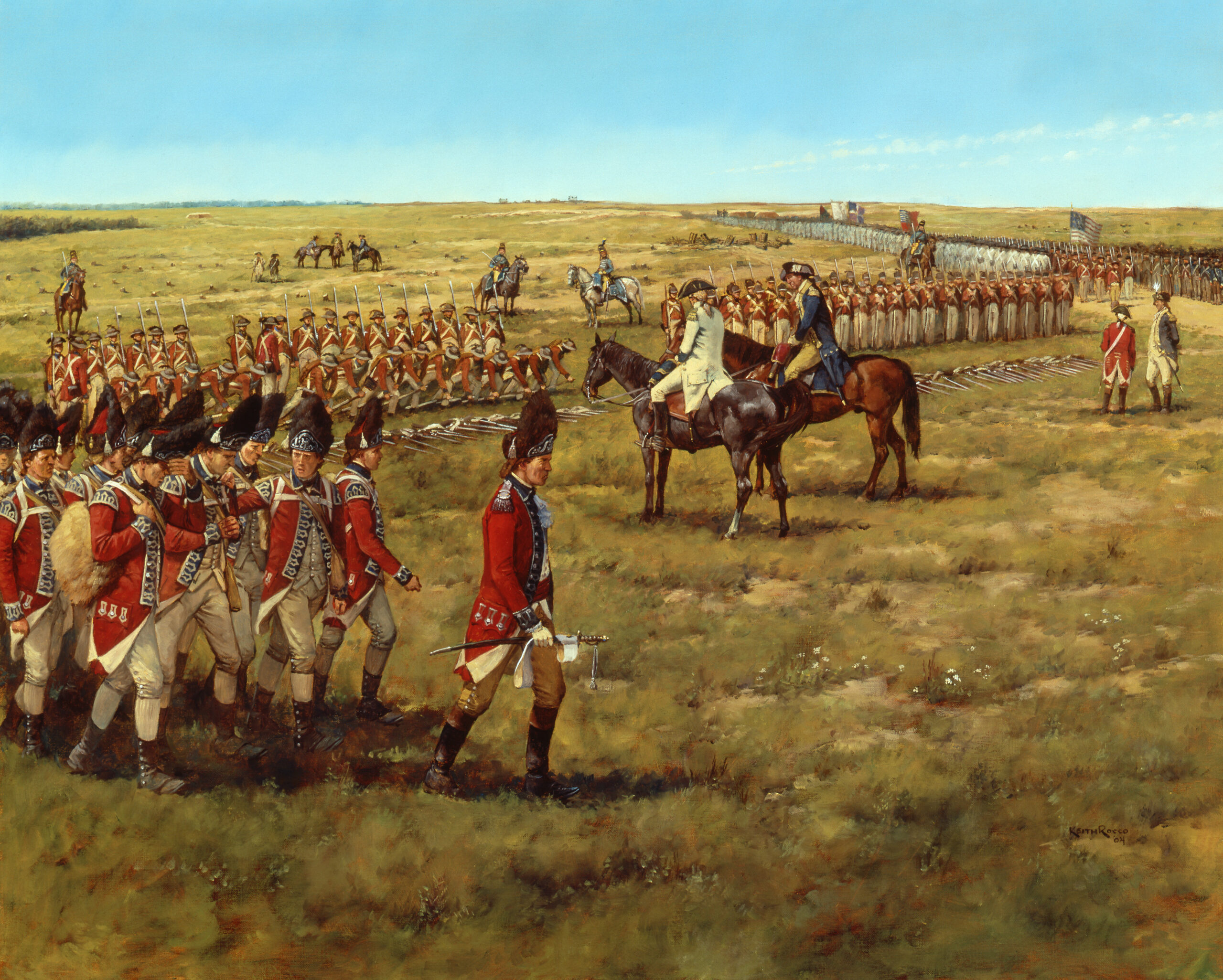
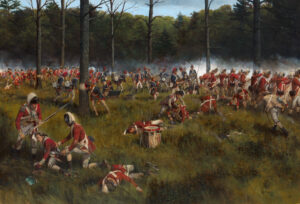
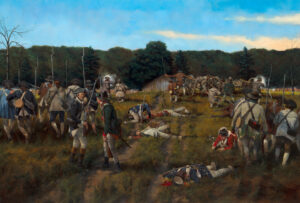
After weeks of being under siege without an avenue of escape, British commander Gen Cornwallis sent forth a drummer on October 17, followed by an officer with a white flag and note indicating a request for a cease fire. A number of notes passed between Gen. Cornwallis and Gen. Washington that day as they set the framework for the surrender. The next day, October 18, four officers–one American, one French and two British–met at the Moore House, one mile outside Yorktown, to settle surrender terms.
On October 19, in a spectacle incredible to all who witnessed it, most of Cornwallis’ army marched out of Yorktown between two lines of allied soldiers–Americans on one side and French on the other–that stretched for more than one mile. The British marched to a field where they laid down their arms, and returned to Yorktown. News of the British defeat at Yorktown spread quickly. Celebrations took place throughout the United States. London was shocked. The British prisoners were marched to prison camps in Winchester, Virginia and Frederick, Maryland. The American army returned to the Hudson River, while the French army remained in Yorktown and Williamsburg for the winter. Clinton and Cornwallis eventually returned to England where they engaged in a long and bitter public controversy over who was to blame for the British defeat at Yorktown. The British Parliament in March 1782 passed a resolution saying the British should not continue the war against the United States. Later that year, commissioners of the United States and Great Britain signed provisional articles of peace. In September 1783, the final treaty was signed which ended the war and acknowledged American independence.
| Medium | |
|---|---|
| Type | |
| Size | 24" x 30" |